What Is Inbound Logistics? Meaning, Process & Examples
Table of Contents
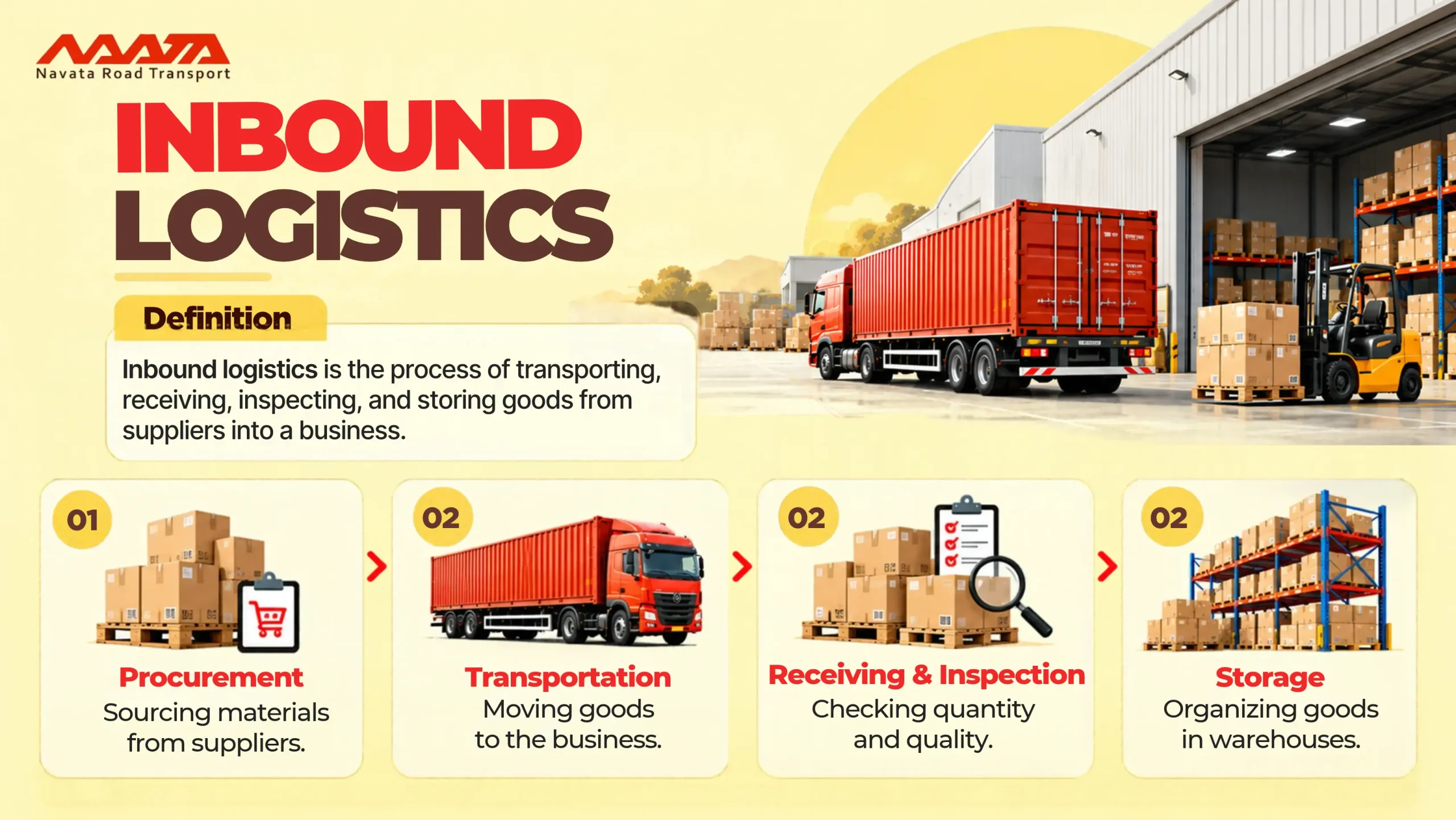
Inbound logistics is the flow of goods, materials and supplies from suppliers into a business. It covers ordering the goods, moving them to your site, receiving and checking them, storing them and recording them in inventory, so that materials are ready for production, resale or daily operations. It is also called inward logistics.
This guide explains the inbound logistics meaning, the five steps of the inbound logistics process, how inbound transportation works when goods move by road in India, inbound logistics examples from different industries, and how inbound logistics differs from outbound logistics.
Inbound logistics meaning in simple terms
The inbound logistics meaning becomes clearer when you look at the supply chain. Inbound logistics manages the supply side of a business: products and materials move from suppliers, manufacturers, ports or distributors into a company’s factory, warehouse or store. These goods may be raw materials, components, packaging, consumables, spare parts or finished products bought for resale.
Several teams usually take part:
- Procurement and purchasing teams
- Suppliers and manufacturers
- Transporters, freight forwarders and customs partners
- Warehouse and receiving teams
- Finance, quality control and inventory teams
- Third-party logistics (3PL) providers
Inbound logistics runs in the opposite direction to outbound logistics. Inbound operations bring goods into the business, while outbound operations move finished products from the business to customers, stores, distributors or fulfilment centres.
The inbound logistics process in five steps
The inbound logistics process follows goods from the purchase decision to the moment they are counted, stored and available for use.
1. Sourcing and procurement
Procurement identifies what the business needs, evaluates suppliers, compares cost and quality, and issues purchase orders that confirm quantities, specifications, payment terms, delivery dates and delivery locations. Coordination continues after the order is placed: suppliers confirm production status, dispatch dates and packing, and flag any change before the goods leave.
2. Transportation
Transportation moves goods from the supplier to the receiving site by road, rail, sea, air or a combination, depending on distance, urgency, cargo type and trade requirements. This step covers choosing the carrier, planning the load and route, preparing the transport documents and tracking the shipment. The section on inbound transportation below explains how it works when goods move by road.
3. Receiving and inspection
Receiving teams unload the vehicle and check quantities, product details, packaging, damage, batch or serial numbers, expiry dates and documents against the purchase order. Shortages and damage are recorded before the delivery is signed for, and quality or compliance teams may inspect materials further before releasing them for use.
4. Warehousing and Storage
Accepted goods are labelled, staged and put away in locations chosen for their handling needs, demand, available space, safety and next use. Good put-away keeps goods protected while leaving them easy to reach for production, sales or fulfilment.
5. Inventory Management
Inventory records are updated as soon as goods are received. The system tracks each item’s quantity, location, batch and condition, supports traceability and reorder points, and tells procurement when stock needs replenishing.
- Sourcing and procurement
- Transportation
- Receiving and inspection
- Warehousing and storage
- Inventory management
You May Also Like Reading: Outbound Logistics – Understanding Definition, Process and Activities
Inbound transportation: how supplier goods reach you by road
Inbound transportation is the transport leg that carries goods from the supplier’s dispatch point to your receiving dock. The decisions made on this leg affect freight cost, transit time and how smoothly goods are received at the other end.
Full truckload or part load
A full truckload (FTL) dedicates a vehicle to one consignment. It suits large, regular volumes from a single supplier and avoids handling along the way. A part load, also called less than truckload (LTL) or part truckload (PTL), lets smaller consignments share space on a vehicle, so you pay for the space you use but accept more stops and handling. Read more about FTL shipping and LTL shipping.
Consolidation and cross docking
When several suppliers send small quantities, their goods can be collected on one planned route, sometimes called a milk run, or brought to a hub and combined into fuller loads. Cross docking goes a step further: incoming goods are sorted and transferred to outgoing vehicles at a facility with little or no time in storage.
Delivery scheduling at the receiving dock
Booking delivery windows with suppliers and transporters spreads arrivals across the day. Receiving teams can then prepare space, equipment and labour in advance, and trucks spend less time waiting to unload.
Documents that travel with an inbound consignment
Goods moving by road in India usually travel with a set of documents that the receiving team checks on arrival:
- The supplier’s tax invoice or delivery challan
- The lorry receipt (LR) issued by the transporter when it accepts the goods
- An e-way bill, where applicable
- A packing list and the purchase order reference
The invoice, the LR and the e-way bill should agree on the consignor, consignee, goods, quantity and value. Checking them together at the gate catches errors before the goods are accepted.
Tracking inbound shipments
Shipment tracking tells the receiving site when to expect each vehicle and warns it early about delays. Transporters usually trace a consignment by its LR number, and many businesses manage inbound loads through a transportation management system that brings orders, carriers and tracking into one place.
Benefits of inbound logistics
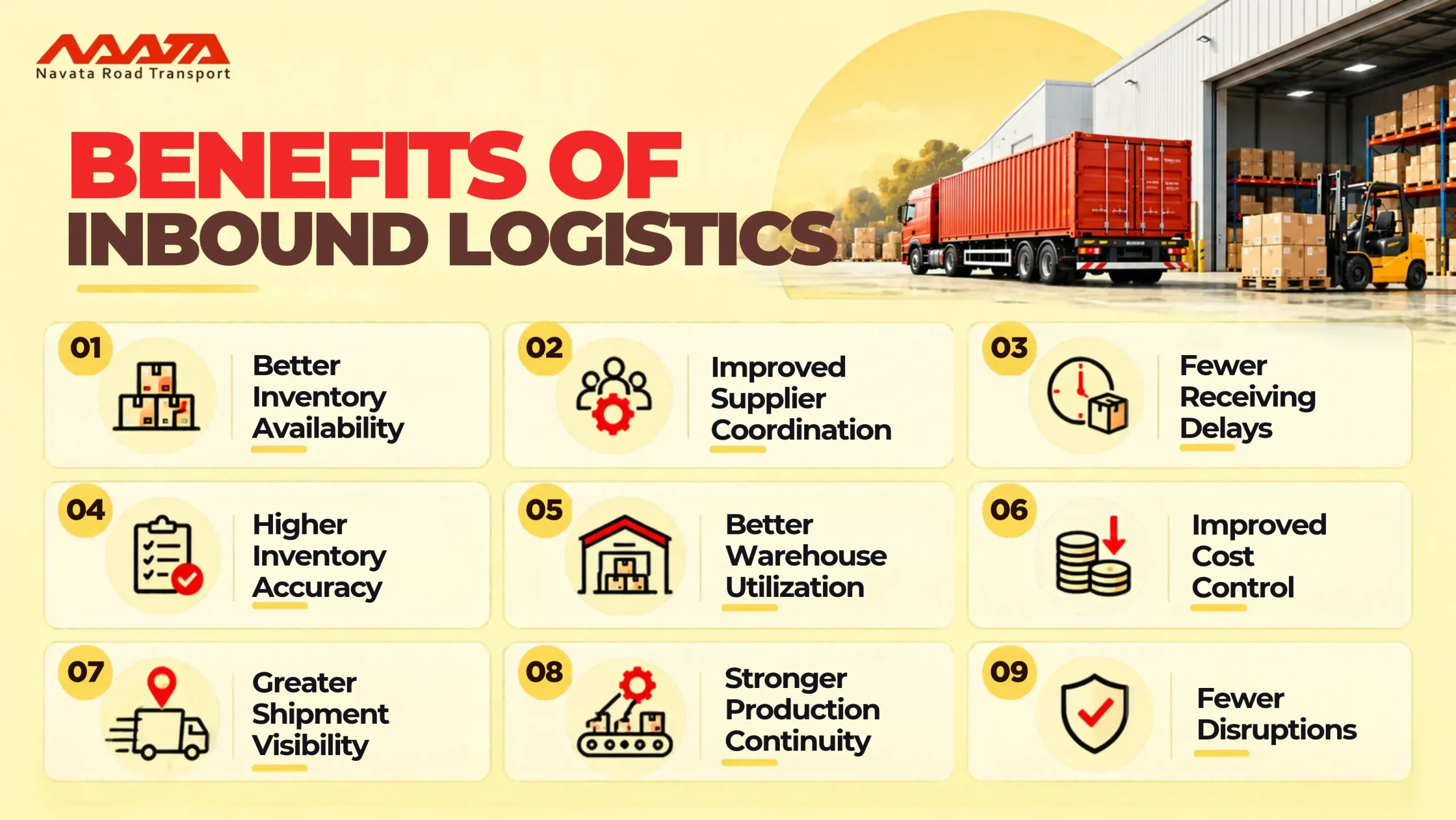
Well-run inbound logistics does more than move goods from suppliers to a business. It creates a reliable flow of materials, improves coordination between teams and helps control inventory, warehouse and transport costs.
- Better inventory availability. Timely, reliable deliveries keep materials and products on hand for production, replenishment and customer orders.
- Improved supplier coordination. Clear purchase orders, delivery schedules, specifications and shipment details mean fewer misunderstandings with suppliers.
- Fewer receiving delays. Accurate shipment details and booked arrival times let the warehouse prepare space, equipment and labour before goods arrive.
- Higher inventory accuracy. Consistent inspection and prompt system updates reduce gaps between physical stock and recorded stock.
- Better warehouse utilization. Planned put-away and organised storage make better use of space while keeping goods accessible.
- Improved cost control. Transport planning, shipment consolidation and fewer emergency deliveries reduce avoidable freight and operating costs.
- Greater shipment visibility. Tracking incoming shipments shows delivery status as it changes, so teams can act on delays before they affect operations.
- Stronger production continuity. A steady flow of inputs reduces the risk of production stopping because something arrived late, short or wrong.
- Fewer disruptions. Supplier monitoring, transport planning, and inventory visibility help the business absorb unexpected problems.
Importance of inbound logistics
Business operations depend on a reliable supply of materials and products. A production line cannot run efficiently if essential components arrive late, and a retailer cannot restock shelves if products are not received and recorded correctly.
- Operational continuity. Timely materials keep factories, warehouses, stores and service operations working.
- Cost management. Better planning limits urgent freight, unnecessary handling, excess stock and avoidable storage costs.
- Supplier performance. Delivery accuracy, lead time, quality and responsiveness can be measured from consistent records.
- Warehouse efficiency. Planned arrivals prevent dock congestion and make better use of storage space and labour.
- Business planning. Reliable inbound information improves purchasing, production scheduling and inventory decisions.
- Customer service. Inbound logistics does not deliver to customers, but product availability depends on it, and delays upstream eventually reach customer orders.
Inbound logistics is therefore more than a warehouse function. It links purchasing decisions, transport execution, inventory control, and everything that happens downstream.
Challenges in inbound logistics
Inbound logistics faces challenges from suppliers, transport, inventory, warehouses and communication. These issues can delay deliveries, raise costs and disrupt production or replenishment.
Supplier delays can cause material shortages and force changes to production schedules. Transport disruptions such as congestion, weather, checkpoint delays or vehicle shortages can lengthen transit times.
Poor inventory accuracy and weak supplier communication can lead to unexpected shortages, excess purchases or planning problems. Damaged or incorrect shipments may need returns, replacements or rework.
Receiving bottlenecks and limited warehouse capacity can delay unloading and put-away. Errors in purchase orders, invoices, transport documents or labels slow receiving and payment further.
Limited shipment visibility and changing demand make it hard to keep the right stock levels and respond quickly. The aim is to spot these problems early and put practical controls in place.
Best practices and KPIs for inbound logistics
Businesses improve inbound logistics through better planning, coordination, visibility, and consistent processes. The following practices reduce delays, control costs and keep incoming goods flowing reliably.
- Set clear supplier requirements for product specifications, packaging standards, delivery schedules, and required documents.
- Standardize receiving procedures for unloading, inspection, quantity checks, discrepancy reporting and inventory updates.
- Plan inbound transportation by choosing the right transport mode and load type, consolidating shipments where practical and booking deliveries to match warehouse capacity.
- Use shipment visibility tools to track dispatches, expected arrivals, delays and exceptions.
- Keep inventory records accurate by recording receipts promptly and regularly reconciling system quantities with physical stock.
- Measure supplier performance on on-time delivery, order accuracy, damage rates, quality and lead time.
- Coordinate procurement and the warehouse so purchasing decisions match available storage space, receiving schedules, and inventory needs.
Track a small set of measures to see whether these practices are working:
- On-time, in-full supplier deliveries: the share of deliveries that arrive on the agreed date with the full ordered quantity.
- Dock-to-stock time: the time from a vehicle’s arrival to the goods being available in inventory.
- Receiving accuracy: the share of receipts recorded without quantity or item errors.
- Inbound freight cost: freight spend per consignment, per kilogram, or per unit received.
- Supplier lead time: the time from purchase order to delivery.
- Damage and shortage rate: the share of consignments received with damaged or missing items.
Technology such as transportation management systems (TMS) and warehouse management systems (WMS) supports these practices, but clear processes and good coordination remain essential.
Inbound logistics examples
These inbound logistics examples show the same five steps in different kinds of business.
Manufacturing example
A furniture manufacturer orders timber, hardware, adhesives, and packaging from several suppliers. Procurement issues purchase orders and confirms delivery schedules. Carriers transport the materials to the factory, where receiving staff count the items, inspect them for damage, and check the delivery against the orders.
The factory labels accepted materials and moves them to their storage areas. Inventory records are updated so production planners can see what is available for upcoming production runs. This is inbound logistics because the materials move from external suppliers into the factory for its own use.
Retail example
A retail chain buys clothing from manufacturers and distributors in different countries. Shipments may travel by sea to a port, pass through a container freight station for handling or consolidation, and then move by road to a regional distribution centre.
At the distribution centre, staff receive and inspect the cartons, record the stock, and allocate products to stores. The movement into the retailer’s network is inbound logistics. The later movement from the distribution centre to individual stores is outbound distribution for that facility.
E-commerce example
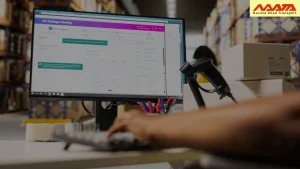
An online electronics retailer receives products from brands and wholesalers at a fulfilment centre. Teams unload cartons, scan barcodes, check quantities and place products in storage locations.
The inventory system then makes the accepted products available for online orders. When a customer orders, picking, packing, dispatch and delivery begin. The supplier-to-fulfilment-centre movement is inbound logistics; the fulfilment-centre-to-customer movement is outbound logistics.
Road freight example
A pump manufacturer in Tamil Nadu buys castings from a foundry in Gujarat and motors from a supplier in Maharashtra. The foundry ships full truckloads on a fixed weekly schedule, while the smaller motor orders travel as part loads. Each truck arrives with the supplier’s invoice, the transporter’s LR and an e-way bill.
At the gate, the receiving team matches the three documents, counts the packages against the LR, notes any damage on the delivery copy and books the goods into stock. Production planners can then see the castings and motors in inventory and schedule assembly.
Inbound vs outbound logistics
Inbound and outbound logistics are two halves of the same flow of goods. The difference lies in the direction of movement and the purpose of the goods.
Inbound vs Outbound Logistics
| Aspect | Inbound Logistics | Outbound Logistics |
|---|---|---|
| Direction | Inbound Logistics From suppliers into the business | Outbound Logistics From the business to customers |
| Goods Moved | Inbound Logistics Raw materials, components, packaging and stock for resale | Outbound Logistics Finished products and customer orders |
| Main Partners | Inbound Logistics Suppliers, transporters and receiving teams | Outbound Logistics Customers, distributors, retailers and delivery partners |
| Main Goal | Inbound Logistics Make the right materials available at the right time and cost | Outbound Logistics Deliver orders on time, complete and undamaged |
| Key Activities | Inbound Logistics Procurement, inbound transport, receiving, put-away and stock recording | Outbound Logistics Order processing, picking, packing, dispatch and delivery |
| Typical Measures | Inbound Logistics Supplier on-time delivery, dock-to-stock time and receiving accuracy | Outbound Logistics Order fill rate, on-time customer delivery and delivery cost |
For example, trucking components from a supplier to a factory is inbound logistics. Shipping the factory’s finished products to a distributor or customer is outbound logistics. Goods coming back from customers belong to a third flow, reverse logistics.
Conclusion
Inbound logistics manages the flow of materials, supplies and goods into a business. It brings together procurement, transportation, receiving, warehousing and inventory management, and it works best when those steps are planned as one connected process.
Done well, it keeps materials available, speeds up receiving, makes better use of warehouse space and shows supply problems earlier. For companies moving supplier goods by road, reliable inbound transportation and accurate consignment documents are central to that result.
What is inbound logistics in simple words?
What is another name for inbound logistics?
What is an example of inbound logistics?
What is the difference between inbound and outbound logistics?
What is inbound transportation?
Navata Road Transport has been delivering trust since 1982.
Thank you for Reading This blog: What Is Inbound Logistics? Meaning, Process & Examples (2026)
Recent Posts